
Last updated November 20, 2026
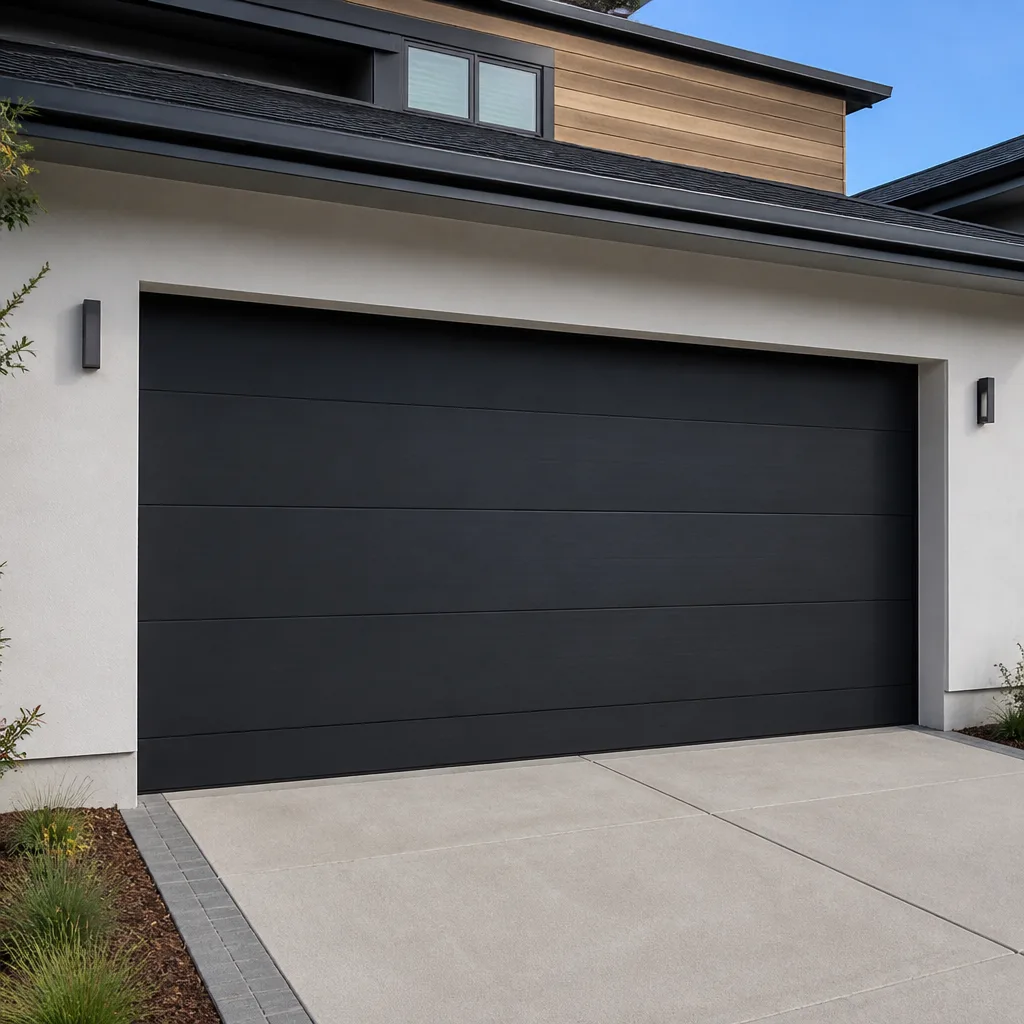 Modern flush
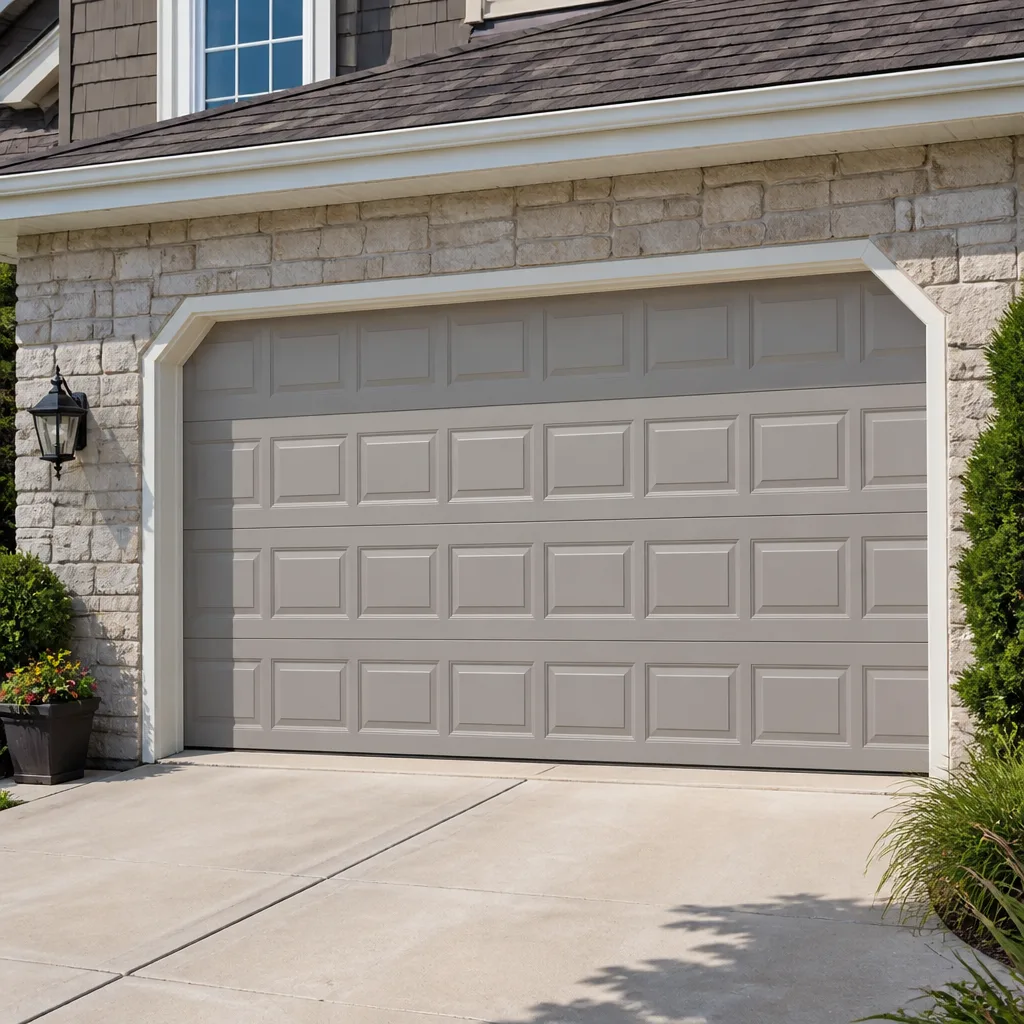 Raised-panel steel
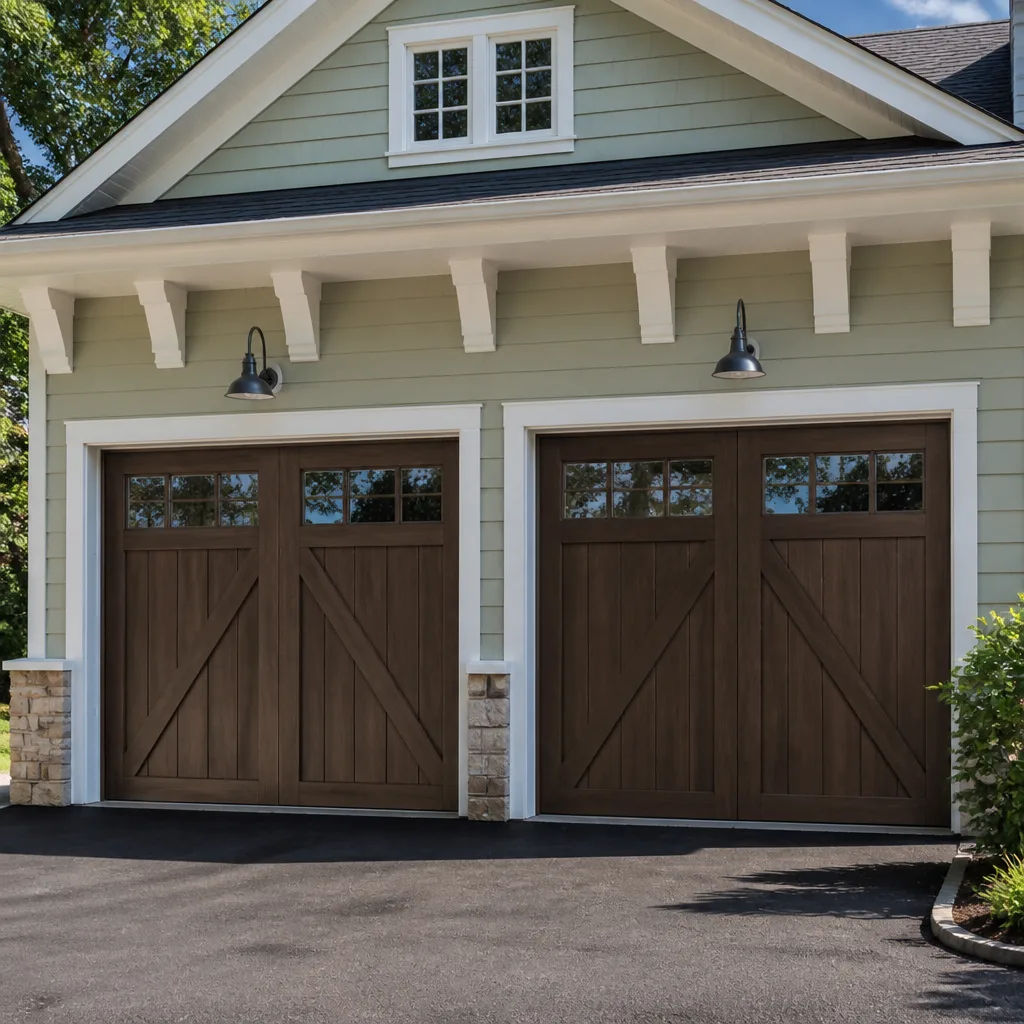 Carriage house
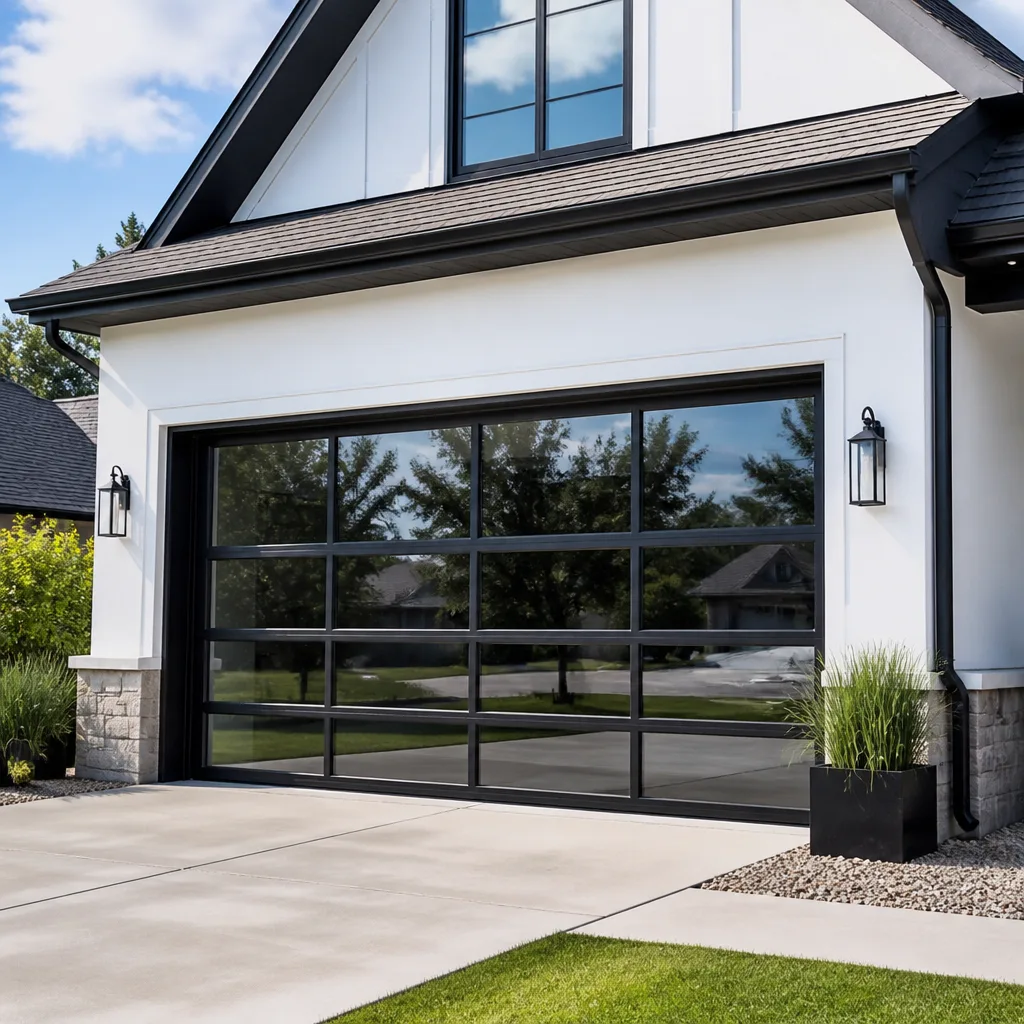 Full-view glass
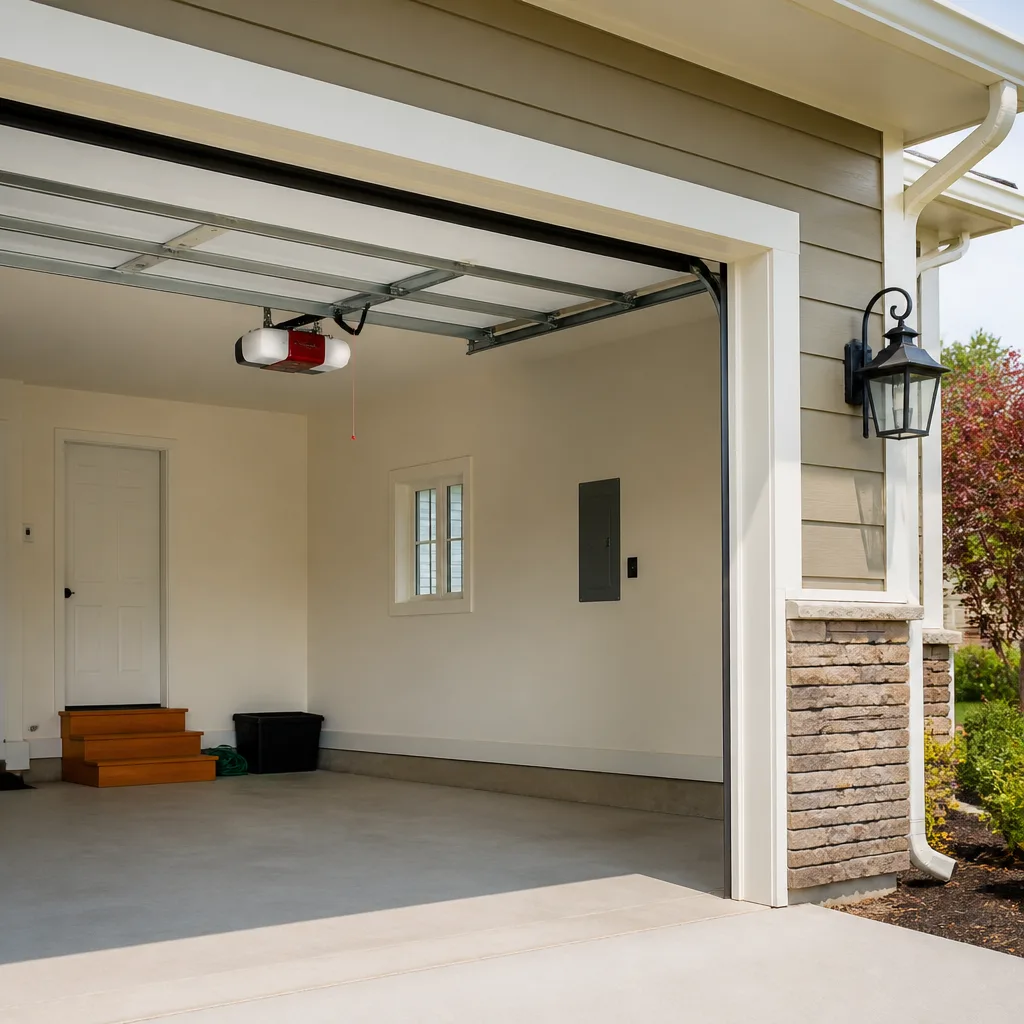 LiftMaster openers
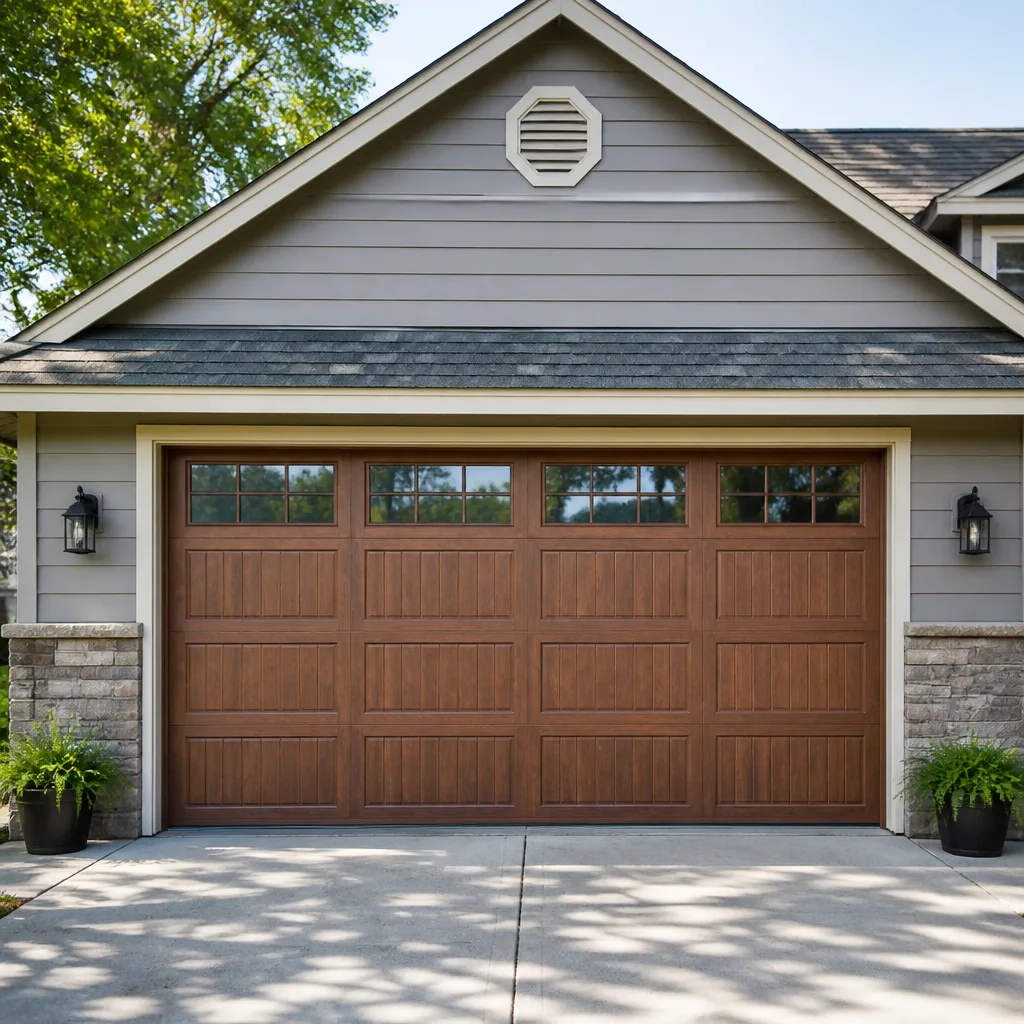 Chamberlain openers
Full 25-point door and opener safety check with every visit - springs, cables, rollers, tracks, and your LiftMaster or Chamberlain opener included
You get a price before we start. It does not change when the pro arrives.
Get your free estimateGarage Door Warning Signs: A Flushing Homeowner’s Reference Guide
A garage door doesn’t snap, crash, or fail silently. It tells you exactly what’s about to go wrong – most homeowners just don’t know the language yet. That slow, heavy lift you noticed last week? That faint pop from the ceiling springs? Those aren’t quirks. They’re the door writing you a note, and it’s usually delivered days or weeks before a minor repair turns into an emergency. This guide is a translation: what each sound, sight, and hesitation actually means, which component is failing, and how urgent the fix really is. We’ve built it for homeowners across Flushing, where older doors and hard-working openers see a lot of cycles. Read it once and you’ll never misread your door again.
Quick Answer
Garage door warning signs fall into four families: unusual noises (grinding, popping, scraping, squealing), movement problems (slowing, jerking, reversing, uneven travel), visible wear (frayed cables, bent tracks, worn rollers), and opener faults (flashing lights, dead remotes, the door reversing without warning). Most component failures give notice before they break, so the homeowner who learns to read the signals can schedule a repair before something fails completely. The single most important warning sign is a door that’s simply slower or heavier than it used to be – that usually points to a spring losing tension, and it should never be ignored.
Styles & brands we work with
- Raised-panel steel
- Carriage house
- Modern flush
- Full-view glass
- LiftMaster openers
- Chamberlain openers
Table of Contents
- Why Your Door Is Trying to Tell You Something
- The Three-Minute Visual Inspection That Catches Cable Fraying
- Why “Just Slower Than Usual” Is the Warning Sign to Take Most Seriously
- Noise Index: What Grinding, Popping, Scraping, and Squealing Each Mean
- Component-by-Component Symptom Chart
- The Severity Scale: Monitor, Schedule, Stop Using
- Signals That Show Up More Often in Flushing Homes
- Common Mistakes to Avoid
Why Your Door Is Trying to Tell You Something
A residential garage door is a surprisingly simple machine made of a few moving parts, each with a predictable wear pattern. Steel torsion springs wind and unwind a fixed number of cycles before they weaken and eventually break. Rollers wear through their bearing surfaces. Cables fray strand by strand, giving plenty of notice if you happen to be looking. When something fails abruptly, almost always the warning was there earlier and either wasn’t seen or wasn’t recognized.
That’s exactly why this guide exists. In our experience, the homeowner who contacts us at the first strange sound generally ends up with a smaller, simpler repair than the one who waits until the door won’t open at all. Booking while the door is still working means a technician can inspect the whole system calmly and choose the right part the first time. Booking after a failure means an emergency call, a car stranded in the garage, and less room for choice.
Flushing homes are a good case study. Many garages in neighborhoods like Murray Hill, Auburndale, and Broadway-Flushing were built for a time when the car didn’t come in and out several times a day. The door and opener get ridden hard, and not every spring or roller that’s in service today was matched to that level of use. A door that’s “working” isn’t always a door that’s safe – it’s just a door that hasn’t failed yet. Learning to read the signals is the difference between a scheduled repair and an emergency, and it’s the whole point of this guide.
We work on Flushing doors and openers every week as dedicated garage door specialists, and we’ve learned that most of the warning signs below are genuinely visible or audible before they turn into a failure. You don’t need to diagnose anything yourself. You just need to know when to look and when to call.
The Three-Minute Visual Inspection That Catches Cable Fraying
You can catch most serious cable and hardware issues with a short walk-around of the door, done with the door closed and the opener unplugged. The whole inspection takes under three minutes and requires no tools or disassembly. Here’s the exact sequence we recommend to Flushing homeowners.
- Look at the cables. Stand to the side of the door and examine the thin steel cables running along the vertical tracks. They should look smooth and tight, without kinks, coils, or fuzzy sections. A fraying cable shows individual strands lifting from the surface – that’s the warning you’re looking for.
- Check the springs. Look at the coil above the door. A torsion spring should be a continuous coil; a visible gap in the middle of the coil means it has split. Never touch the springs, and never try to adjust them. This is a look-only check.
- Inspect the rollers. Rollers should sit flat in their tracks and turn freely by hand. Worn rollers look chipped, flat-spotted, or loose in their stems.
- Scan the tracks and hinges. Tracks should be straight and parallel. Hinges should be tight, not loose or bent.
- Look at the bottom seal and panel edges. With our local climate’s swings between humid summers and cold winters, wood and steel doors take a beating at the bottom edge. A warped or missing bottom seal allows water intrusion and often signals a panel that’s out of alignment.
If anything on that list looks off – especially a frayed cable or a gap in the spring – stop using the door and have it inspected before you run it again. Cables under tension are genuinely dangerous to handle, and this is one inspection that’s safe to do but not safe to fix yourself. A cable that snaps while someone is standing near it causes serious injury, so treat any visible fraying as a hard stop.
Why “Just Slower Than Usual” Is the Warning Sign to Take Most Seriously
Of every warning sign in this guide, the one homeowners most often dismiss is also the one most worth catching early: a door that’s slower or heavier than it used to be. A garage door should move with the same steady rhythm every time. When it starts to lag, hesitate, or feel like it’s straining, the balance system is usually the culprit – specifically, the springs.
Springs are what lift most of the door’s weight. As they lose tension, the opener has to work harder to compensate. On the surface the door still opens, so the homeowner shrugs it off. Underneath, the opener motor and gears are fighting a losing battle. What starts as a slightly slow door can turn into a stripped opener gear, a burned-out motor, or a snapped spring – and now you’re paying for two repairs instead of one.
If you’ve noticed your Flushing door hesitating at the start of its lift or taking longer to fully open, that’s the moment to schedule a repair, not a month later. The most common cause is a spring approaching end of life, and a technician can measure the tension and identify exactly what’s changed. It may not even be the springs – a worn roller or a dragging track can slow a door down – but only an inspection tells you which. Either way, catching it while the door still works usually means a simpler fix.
One quick test that won’t put you at risk: disengage the opener (usually by pulling the red release handle while the door is closed), then lift the door by hand about a foot and let go. A well-balanced door should stay roughly where you left it. If it slams back down or won’t open without real effort, the springs aren’t doing their job and it’s time to call. Do not re-engage the opener if the door dropped hard – it will fight the resistance and risk more damage.
Noise Index: What Grinding, Popping, Scraping, and Squealing Each Mean
Garage door sounds are specific. Each noise tends to point at one component, and the pattern is consistent enough that we can often narrow down the likely part before arriving. Here’s the translation table.
- Grinding: Usually a metal-on-metal sound from the opener gear, from a roller that’s lost its bearing, or from a door panel dragging on the track. A grinding opener sounds like the motor is chewing something up – often a stripped gear.
- Popping: A sharp, sudden pop from overhead usually means a torsion spring is breaking or has broken. If you hear it once and the door suddenly becomes very heavy or won’t lift, that’s the spring and the door should not be operated.
- Scraping: A rough, continuous scrape as the door moves means something is dragging – a bent track, a misaligned panel, or a loose hinge that’s rubbing. Scraping often gets worse fast if ignored.
- Squealing: A high-pitched squeal usually points to dry hinges, dry rollers, or a worn bearing. It’s the most benign sound of the four but often the earliest sign of a part on its way out.
- Rattling or clanking: Loose hardware – hinges, brackets, or a slightly loose spring winding – often causes a rattle that follows the door’s movement.
- A rhythmic thumping or shuddering: Usually an unbalanced door, a worn roller, or a door that’s out of level on one side.
Because our climate cycles between hot, humid summers and cold winters, some squealing and minor rattling is seasonal and fairly common in Flushing garages. Cold weather makes lubricants stiffer, and hot weather can loosen the fit on wood doors in particular. That said, any noise that starts suddenly or gets worse over a few weeks deserves a look. If your door has started making noises that weren’t there last month, it’s worth having someone hear them in person – a technician can distinguish a harmless seasonal squeak from the early warning of a failing part in less time than it takes to describe it over the phone.
Component-by-Component Symptom Chart
This is the reference table. Each row maps a common symptom to the most likely failing component, the urgency level, and what it usually means for the repair.
- Springs (torsion or extension): Door feels extremely heavy; will not stay open on its own; visible gap in coil; loud pop. Urgency: STOP USING. Springs are the most dangerous component – never adjust them yourself.
- Cables: Frayed, kinked, or slack cable; door goes up crooked; door stuck halfway. Urgency: STOP USING. A snapped cable is a safety hazard.
- Rollers: Squealing, flat-spotted rollers, door vibration and noise. Urgency: SCHEDULE. Worn rollers don’t typically fail catastrophically but they do wear the tracks.
- Tracks: Scraping sound, visible bend or kink, door binding on one side. Urgency: SCHEDULE or STOP USING if the door won’t move freely.
- Opener: Grinding noise, reversing before closing, dead remotes, flashing error lights, stripped gear sounds. Urgency: MONITOR or SCHEDULE depending on function. Opener repairs across LiftMaster, Chamberlain, Genie, and Craftsman are common.
- Panels and hinges: Cracks, warps, loose or bent hinges, board panels separating. Urgency: MONITOR, but don’t ignore a hinge that’s pulling loose.
- Weather seal: Crumbling, missing, or warped bottom seal; water intrusion. Urgency: MONITOR, and replace before the next wet season.
- Photo-eye sensors: Door reverses immediately on closing; sensor lights flicker or stay dark. Urgency: SCHEDULE – the door should not be trusted to close when sensors are misbehaving.
If you have a Clopay, Amarr, Wayne Dalton, or Craftsman door, brand doesn’t change the diagnosis – the components work the same way across models. Where brand matters is the parts and opener electronics. Our technicians are familiar with these systems and with LiftMaster, Chamberlain, Genie, and Raynor openers, which means they can usually identify the culprit on the first visit rather than running back for a part. If your issue turns out to be electrical, our garage door opener repair page covers the electronic side in detail.
The Severity Scale: Monitor, Schedule, Stop Using
Every symptom you’ll notice falls into one of three categories. Learn to sort them and you’ll always know what to do next.
Monitor
Cosmetic or minor issues that don’t affect safe operation. Slight squealing, a small dent, a weather seal that’s starting to look worn, a little rattle on the hinges. Keep an eye on these and mention them at your next service.
Schedule
Anything that’s affecting function but hasn’t become dangerous yet. Slower operation, a door that’s harder to open by hand, opener reversing without a clear cause, worn rollers, one noisy hinge, a track starting to bend. Book a repair in the near term – the door will likely still work, but it’s working against itself and the repair gets bigger the longer you wait.
Stop Using
Anything that has become a hazard right now. A spring that’s snapped or looks split, a frayed cable, a door that’s hanging crooked, a door that won’t stay open by itself, or a loud pop followed by a sudden loss of lift. In these cases, disconnect the opener, keep the door down if it’s safe to leave it there, and call for a professional inspection before opening it again. Do not attempt to close or open a door that’s hanging unevenly – it can come off its track.
Most Flushing homeowners who call our team after a failure describe a symptom that fits the “Schedule” category they’d noticed days or weeks earlier. Getting ahead of that window is the whole reason this guide exists. A repair that could have been scheduled can usually be handled without the door being stuck, the car being trapped, or anyone standing under a load-bearing door that’s under more stress than it should be.
One Flushing-specific note: many garages here sit directly behind the home with a narrow driveway and low clearance. When a door fails completely, it can trap a car and block access to the house itself. If that happens, don’t force the door up by hand. Call a specialist and describe the symptoms – a door that’s hanging, jammed, or stuck at an angle can often be released safely by a technician, but forcing it can make things worse.
Signals That Show Up More Often in Flushing Homes
Garage doors all over Flushing do the same mechanical work, but a few signals turn up more often here than you might expect. Our climate is a real factor. Flushing summers are long, humid, and hot, and winters bring cold snaps and freeze-thaw cycles. That cycle stresses door hardware more year-round than a mild climate does.
- Seasonal squealing that becomes year-round. Hinges and rollers that only complained in the coldest weeks can become a permanent squeal once the humidity returns. If a noise doesn’t clear up with the season, it’s time for a service.
- Door panel warping in wood and steel doors. Older wood panel doors – including a number of Clopay and Wayne Dalton models you’ll see in this neighborhood – often start to warp at the bottom edge after a few wet seasons. Worn paint at the bottom panel is a good early warning.
- Track misalignment from settlement. Older garages in Flushing, especially in neighborhoods with lots of prewar housing, sometimes see the concrete floor or the door track settle over time. A door that’s slightly out of level can be a settlement issue rather than a hardware issue.
- Opener strain on older doors. When a new opener is installed on an old door without re-balancing, the opener has to work harder than it should. If you’ve had an opener replaced but the door is still slow, the springs may be the underlying problem.
- Security concerns. If a door ever fails to close fully or reverses repeatedly in a Flushing home, it’s worth treating that as a stop-using warning – a door that doesn’t close leaves the property open. Emergency service exists for exactly this situation.
Because so many Flushing homes have a shared driveway or a tight garage footprint, a door that fails mid-cycle can be a real inconvenience. If your door is stuck open, hanging awkwardly, or trapping a car, that’s the emergency case. Our garage door repair page covers how we approach the urgent calls, and our Garage Door Repair Flushing team can walk you through how to make the door safe until a technician arrives.
What to Do When You Notice a Warning Sign
The steps from noticing a symptom to getting it fixed are simpler than most homeowners expect.
- Note what you heard or saw. The noise, when it happens (opening, closing, both), and how long it’s been going on give the technician useful information.
- Stop cycling the door if the symptom is serious. Spring, cable, and hanging-door problems are stop-using warnings. Leave the door where it is and don’t force it.
- Do the three-minute visual check. If you can spot the issue, you can describe it precisely when you call.
- Call for an inspection. Free estimates mean you’re not paying just to get a diagnosis. Call (855) 337-1761 and describe what you’re seeing and hearing.
- Get a clear plan before any work starts. The technician should explain what’s wrong, what the repair involves, and what the quoted price is. The written estimate sets the price, and the work starts only after you’ve agreed to it.
A scheduled repair while the door still works is a different experience from an emergency call. The same warning signs that lead to a tenser, more expensive emergency repair can, if caught earlier, lead to a simple repair that fits around your day. That’s the whole reason to watch for warning signs.
If you’re thinking about a full replacement rather than a repair, our garage door installation page covers how a replacement is planned, measured, and scheduled. And if the warning sign is on the opener side – remote issues, reversing, dead electronics – we can take a look at the system as a whole rather than sending you to a second company for the electrical side.
Common Mistakes to Avoid
These are the moves we see homeowners make most often, and each one tends to turn a manageable repair into a bigger job.
- Ignoring the “slower” warning. A door that’s slightly slow to lift is likely fighting a weakening spring. Waiting until it fails usually means paying for two repairs – spring and opener – instead of one.
- Lubricating a failing part. Spraying hinges and rollers with oil quiets a squeal but doesn’t fix a worn bearing. If a squeal returns within a few weeks, stop lubricating and get it inspected.
- Adjusting the springs yourself. Torsion springs are under extreme tension – a slip can cause severe injury. There’s no safe DIY adjustment once a spring is loaded.
- Forcing a door that’s jammed. A door stuck at an angle can come off its track and drop. Pushing or pulling it by hand risks injury to you and damage to the door.
- Assuming brand loyalty means brand service. Plenty of garages in Flushing have a Clopay door and a LiftMaster opener from different installs. A good technician can handle whichever brands you have, which is why a multi-brand specialist is worth having on call.
- Replacing the opener when the door is the problem. If the new opener is grinding or the door is still heavy, the issue is usually springs or track – not the opener. Diagnose before you replace.
- Skipping the bottom seal check. Flushing winters and humid summers take a toll on the bottom seal. A worn seal lets water in and eventually warps the panels. It’s cheap to fix early and expensive to fix late.
Each of these mistakes is easy to avoid once you know what to look for. The reference chart earlier in this guide is worth keeping on hand for the first month or two. After that, reading your door becomes second nature.
See the difference
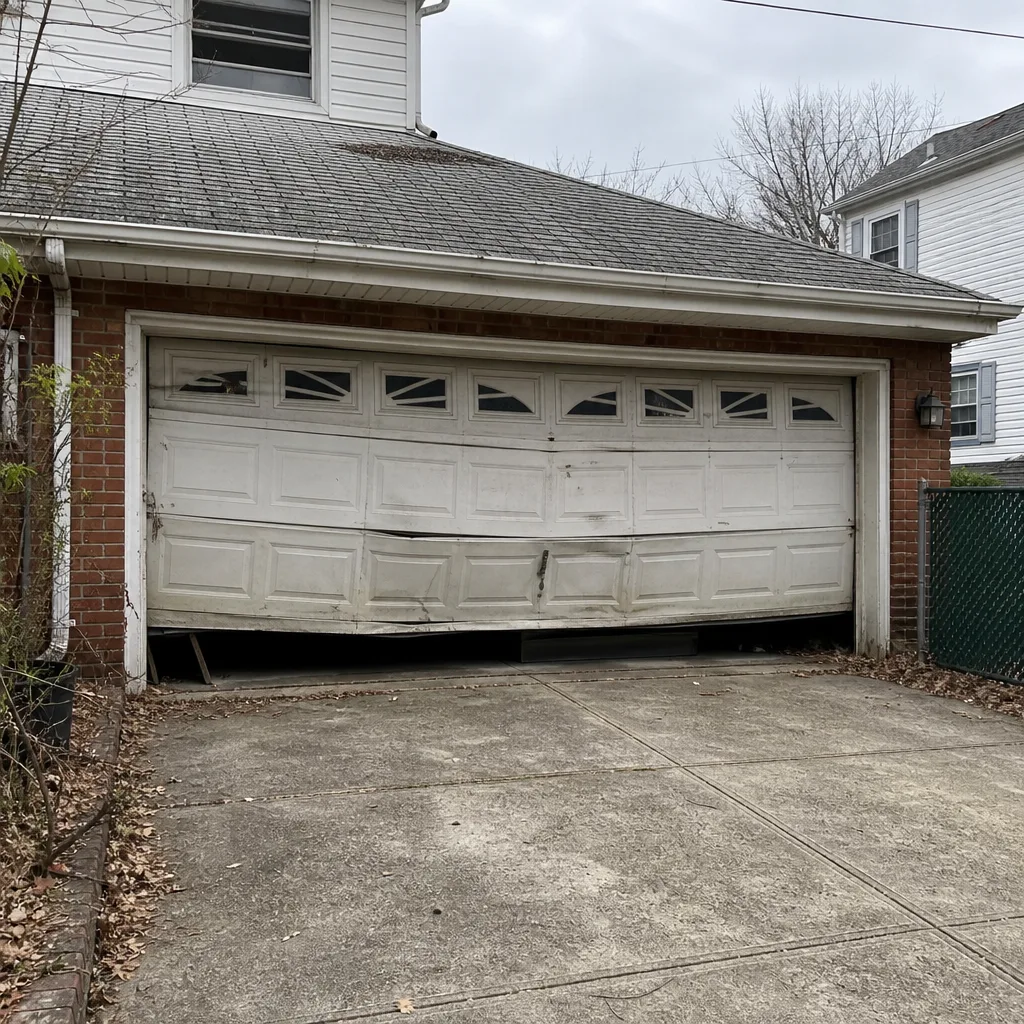 Before
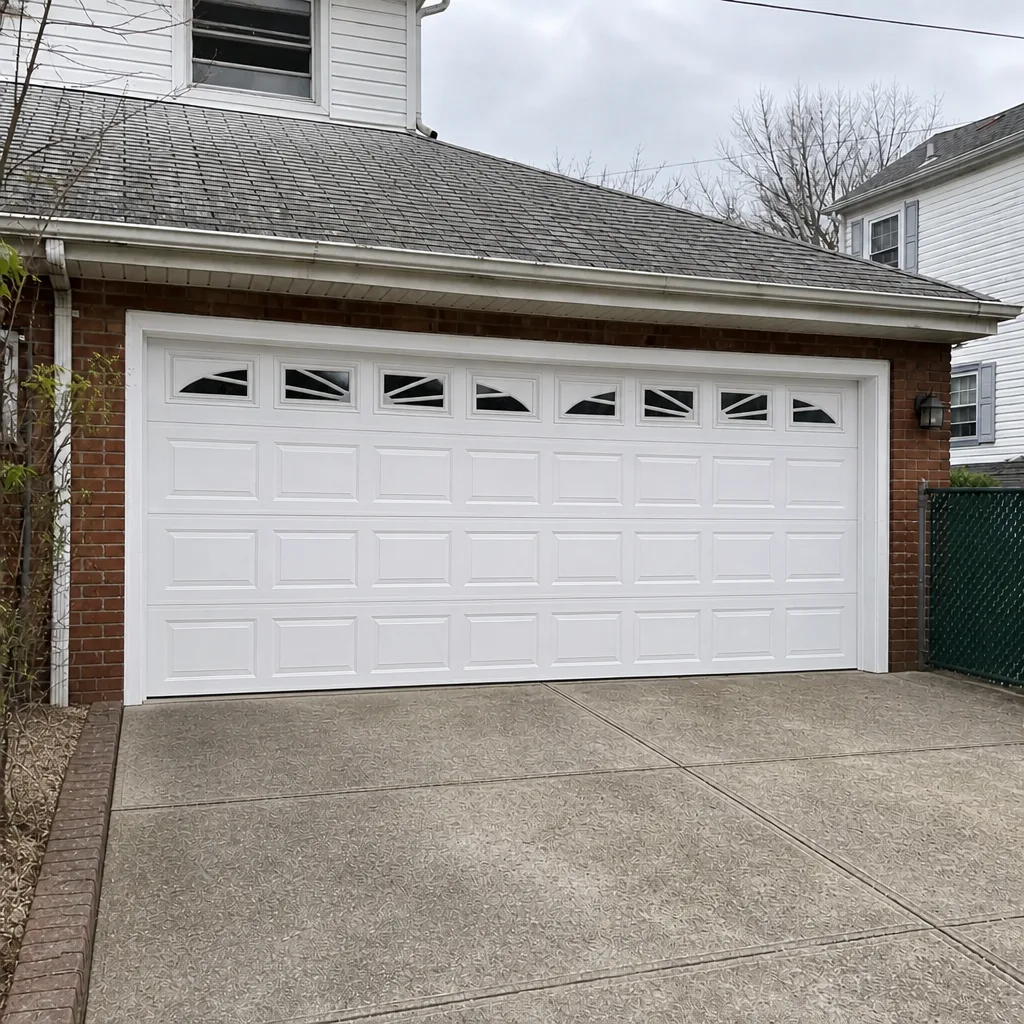 After
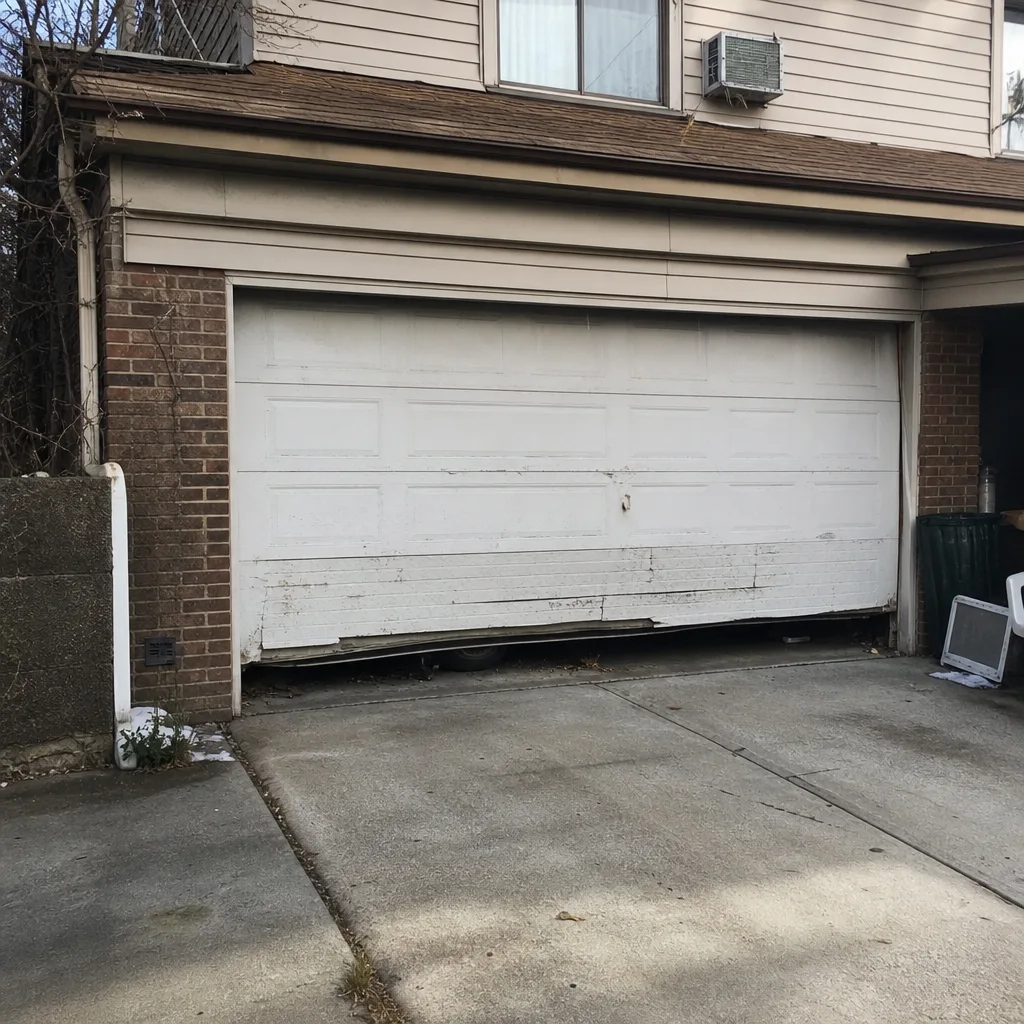 Before
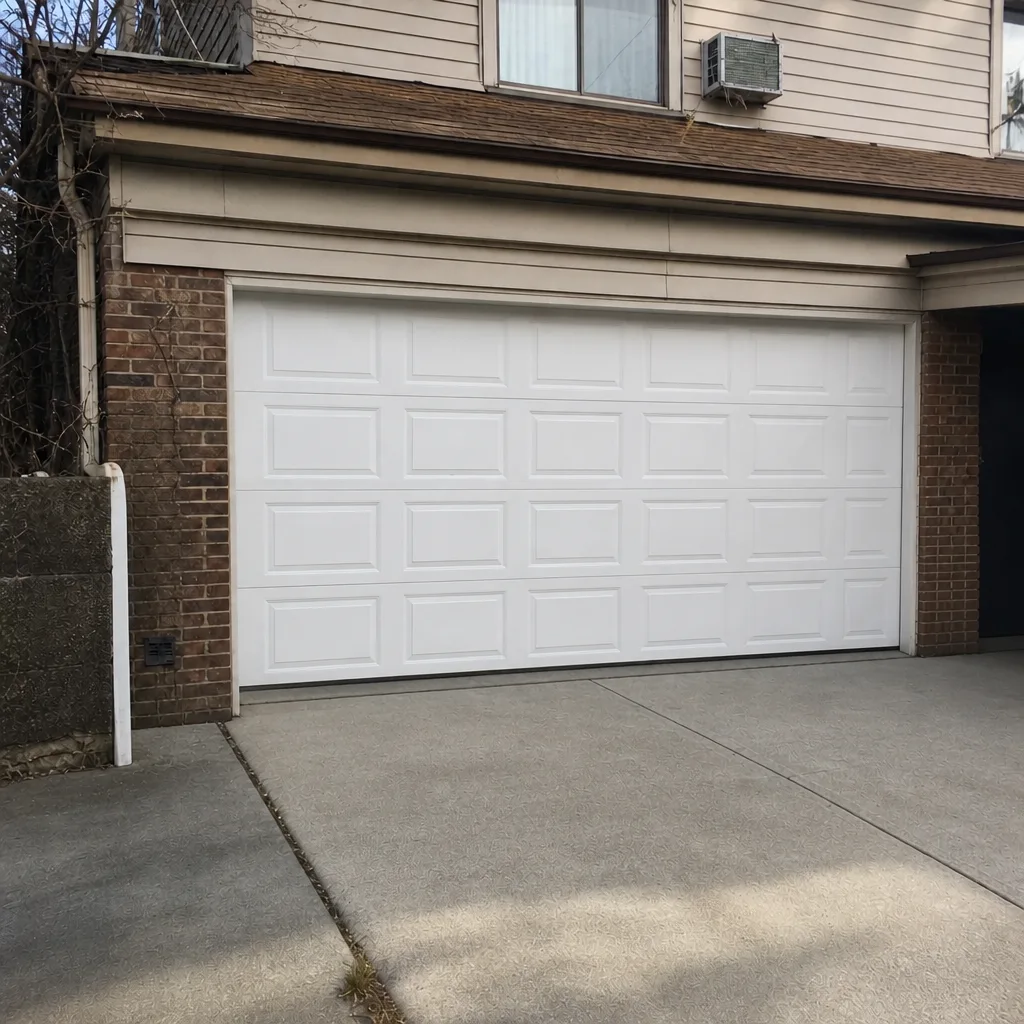 After
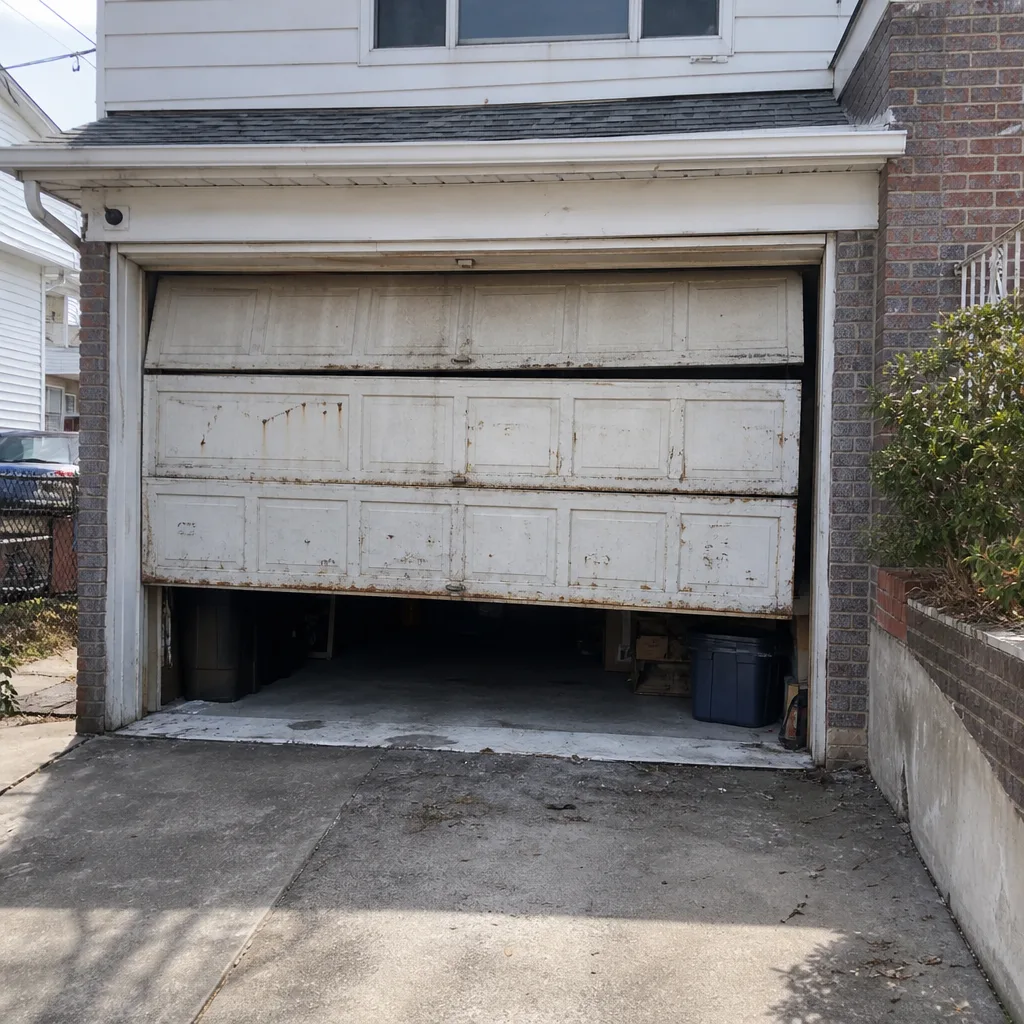 Before
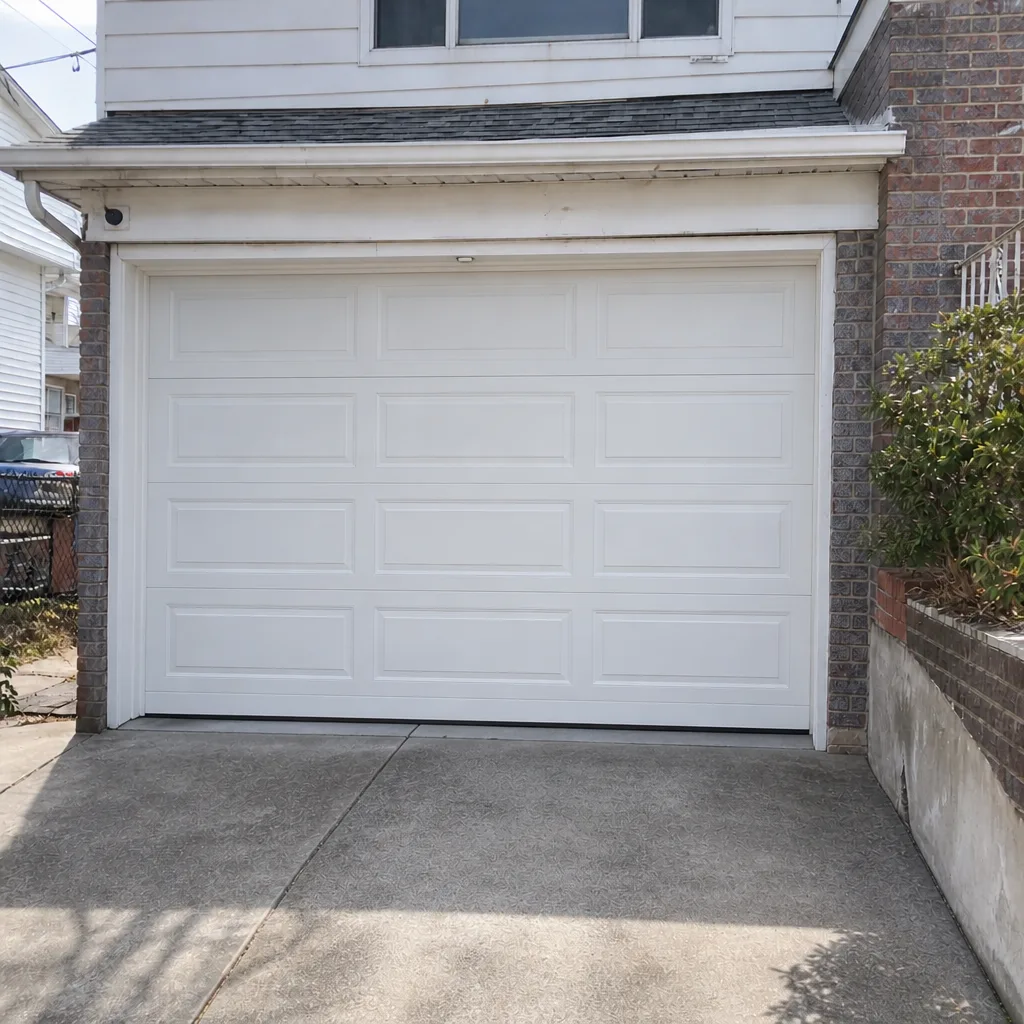 After
When to Call a Professional
Some jobs are safe to handle yourself. Most garage door work isn’t. If any of these situations applies to your door right now, call a professional before using it again.
- A spring has snapped or looks split.
- A cable is visibly frayed, kinked, or slack.
- The door is hanging unevenly, won’t close fully, or won’t stay open by itself.
- The opener is grinding, reversing without a clear reason, or the door won’t respond to the remote at all.
- The door got slower or heavier over a few weeks, and the trend hasn’t reversed.
- You’ve had an ongoing noise – grinding, scraping, popping – that you can’t locate.
Garage Door Repair Flushing offers free estimates in Flushing, and our technicians have up to 11 years of experience diagnosing exactly these symptoms. We answer the phone 24/7, and our technicians are dispatched 7am to 7pm, Sunday through Friday. Call (855) 337-1761 to describe what your door is doing and get a clear picture of what it needs. If you’re in Flushing and not sure whether it’s worth a visit, the call is the cheapest way to find out.
Frequently Asked Questions
The most common warning signs are a door that’s slower or heavier than usual, new noises (grinding, popping, scraping, or squealing), a visibly frayed cable, a door that won’t stay open by itself, and an opener that reverses without reason. Any of these means the door should be inspected. Call (855) 337-1761 for an exact assessment – estimates are free.
A broken torsion spring usually shows as a visible gap in the coil above the door, a loud pop, and a door that suddenly feels extremely heavy. Never test a spring yourself or try to adjust it. Spring repair is the most safety-critical garage door service we perform, and it should always be done by a trained professional. Call (855) 337-1761 if you suspect a spring failure.
A light squeal that clears up with the weather is usually fine to monitor, but a grinding, scraping, or popping noise should be checked before running the door again. These sounds typically point to a real component issue – a worn roller, a damaged track, or a breaking spring – and ignoring them often turns a small repair into a bigger one. Call (855) 337-1761 for a free estimate.
Cold weather thickens lubricant and can slow down an already-worn door, but a door that gets slower over a few weeks – regardless of season – usually points to springs losing tension. Cold slows a door slightly; a slow trend over time means balance-system wear. Either way, an inspection tells you which. Call (855) 337-1761 to schedule a look.
Yes, in most cases. We handle opener electronics as well as mechanical door parts, which matters because the two often interact. If your opener is a LiftMaster, Chamberlain, Genie, Craftsman, or Raynor system and it’s acting up, we can inspect the opener and the door together. Call (855) 337-1761 and describe what you’re seeing.
Yes. It’s common in Flushing to find a door from one brand paired with an opener from another. Our technicians are familiar with LiftMaster, Chamberlain, Genie, Clopay, Amarr, Wayne Dalton, Craftsman, and Raynor systems, so you don’t need a second company for the electronic side. Call (855) 337-1761 for a free estimate.
The Bottom Line
Garage doors fail slowly before they fail suddenly, and the warning signs are specific enough to read if you know the language. A slower door points to springs; grinding points to the opener gear, rollers, or track; a pop means a spring has broken; a frayed cable means stop using the door today. Use the three-minute visual inspection to catch cable wear before it snaps, and use the severity scale to decide whether to monitor, schedule, or stop. Every one of those decisions is easier when it’s made ahead of an emergency in Flushing. If you spot a warning sign you can’t place, call us before you keep running the door. The earlier a repair is booked, the simpler it tends to be.
Call (855) 337-1761 for a free estimate. We answer 24/7. Fast dispatch from 7am to 7pm, Sunday through Friday.
Written by the team at Garage Door Repair Flushing.